"Times up" - Five players who won't play for England again
Rugby NewsSaturday, 04 April 2026 at 09:02
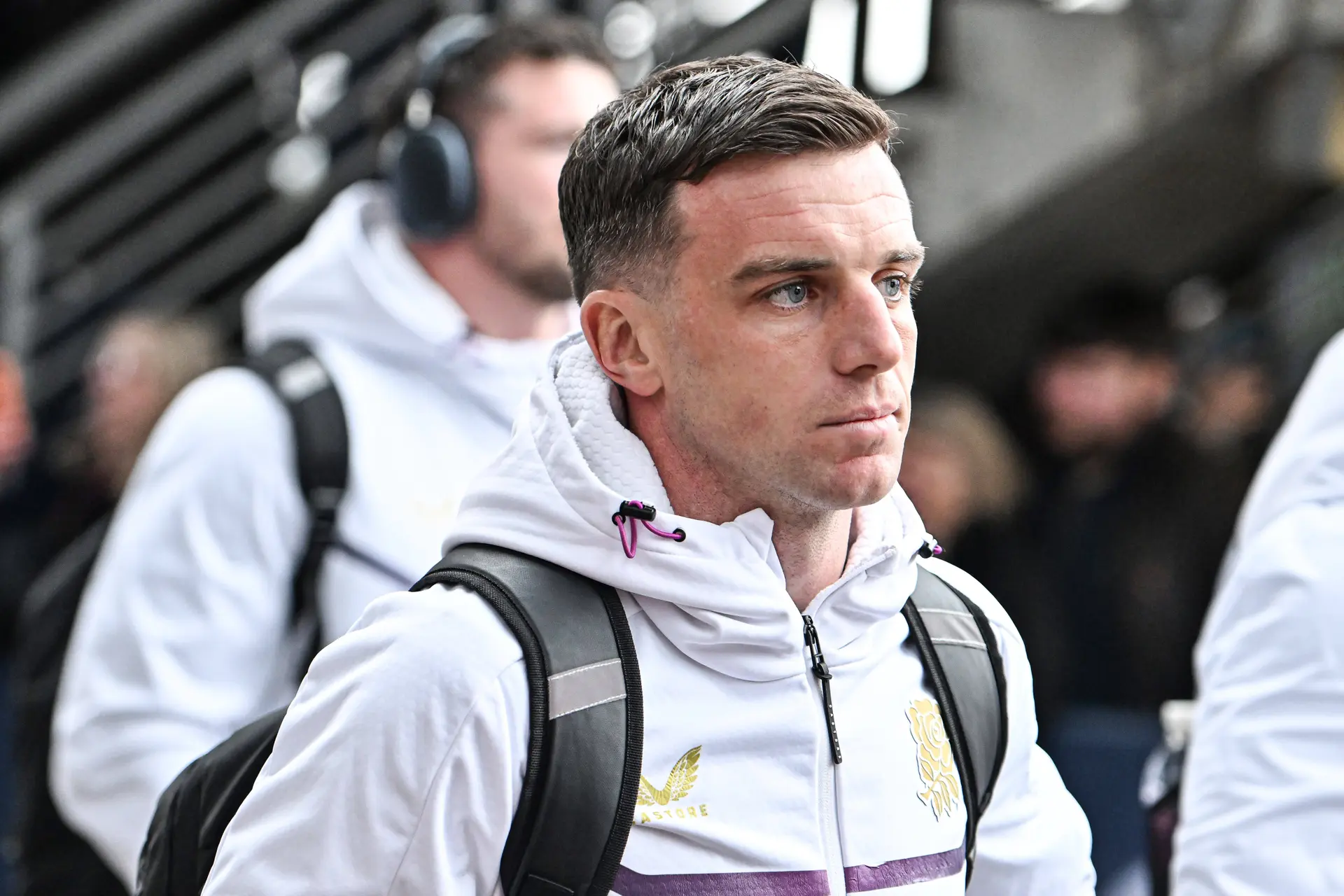

England’s 2026 Six Nations will be remembered for all the wrong reasons.
Steve Borthwick’s side lost four matches in a single championship for the first time in their history and finished second from bottom in the table — a sobering outcome for a team that had spoken confidently about building momentum towards the 2027 Rugby World Cup.
⭐ Save us to your Google Favourites for nonstop RUCK content!
But difficult tournaments often accelerate change.
Across the campaign England increasingly turned to younger options and experimented with new combinations, a clear sign the coaching staff are already thinking about the next cycle rather than clinging to the past.
That shift inevitably leaves some experienced figures vulnerable.
For several established names, the 2026 Six Nations may not just have been a disappointing campaign — it may have been the final chapter of their England careers.
Join the RUCK’s WhatsApp community here and get the latest news sent straight to your messages.
Elliot Daly
Elliot Daly’s afternoon against France summed up the wider dilemma surrounding his England future.
From England’s first two attacking opportunities he kicked possession away — decisions that felt symptomatic of a backline still struggling for attacking clarity. There was a bright moment when Daly delivered a sharp pass that helped create Tom Roebuck’s try, but defensively he was exposed more than once in the wide channels.
The moment Marcus Smith replaced him — and scored almost instantly — only sharpened the contrast.
His outing against Italy earlier in the tournament didn’t do much to strengthen his case either. Daly was solid enough under the high ball but struggled to impose himself on the game and England’s backfield defence looked vulnerable during key moments.
At 33 and with England clearly trying to refresh their back-three options ahead of the next World Cup cycle, Daly increasingly feels like a stopgap rather than a long-term piece of the puzzle.
Versatility has always been his selling point.
But in a squad now prioritising specialists, that versatility might no longer be enough.
George Ford
The omission of Ford wasn’t subtle.
After back-to-back defeats to Ireland and Scotland, Borthwick didn’t rotate his senior fly-half — he removed him entirely. With Fin Smith handed the reins and the coaching staff doubling down on a refreshed backline, it signalled a strategic shift rather than a temporary tweak.
Ford has been one of England’s most dependable operators over the last decade. But international rugby moves fast, and World Cup cycles move faster. At 30+, he now looks like yesterday’s solution to tomorrow’s problem in the eyes of the current regime.
Could he return in a crisis? Possibly. But coaches rarely pivot away from an established No.10 this decisively unless they’re planning long-term.
Right now, it feels like the page has turned.
Luke Cowan-Dickie
Few players endured a rougher Six Nations campaign than Luke Cowan-Dickie.
Across England’s defeats to Scotland, Ireland and France, the hooker struggled to impose himself in the areas that once defined his game. The lineout — usually one of his strengths — looked shaky at times, while his work around the breakdown failed to deliver the kind of impact England needed during momentum swings.
Player ratings across the tournament reflected that dip in form, with Cowan-Dickie repeatedly marked down for quiet or ineffective displays in matches where England were outmuscled up front.
That wouldn’t necessarily spell the end of an international career on its own.
But when those performances arrive at the same moment younger options are pushing through and England are trying to reshape their forward pack, the timing becomes problematic.
Hooker is an unforgiving position when it comes to succession planning.
And right now, England appear to be planning for life after him.
Owen Farrell
Owen Farrell has made a point of stressing that he has not retired from international rugby.
The former England captain has repeatedly said the door remains open should he wish to return. But the reality is that a comeback now feels increasingly distant — even as England struggled for consistency during the 2026 Six Nations.
Steve Borthwick has spoken about the importance of continuity ahead of the next World Cup cycle, and England’s selections suggest a leadership group being built around newer figures.
With younger options now trusted at both fly-half and inside centre, Farrell’s path back into the side looks narrower with every passing window.
Never say never in Test rugby.
But unless something changes dramatically, it feels increasingly likely that England have already moved on.
Tom Willis
The situation surrounding Tom Willis is far more straightforward.
After deciding to move abroad, Willis effectively removed himself from the England equation under RFU selection policy. Steve Borthwick later made it clear the coaching staff would prioritise players who are part of the pathway towards the 2027 Rugby World Cup — and confirmed Willis does not fall into that group.
That’s about as direct as it gets.
Regardless of form, availability remains king in Test rugby. Once a player steps outside the selection framework, reversals are rare — particularly when a new cycle is already underway.
Willis may still be performing at club level.
But from England’s perspective, the focus has already moved elsewhere.
TRENDING


LATEST NEWS
LATEST COMMENTS
- Jordie Barrett over Damian de Allende is far from being correct. The hype around Dupont is also overreaching, he's probably 4th in the world and has been since the 2023 WC. He also avoids certain matchups which is strange. The rest of the list is pretty good apart from minor subjective biases.JasonMarlow16-09-2026
Loading