The future of free-to-air Six Nations coverage in the UK is uncertain, as the BBC has suggested it might step back from broadcasting the prestigious tournament.
Book VIP Six Nations Packages, Hospitality and Premium Experiences from Seat Unique.
Under the current agreement, broadcasting rights in the UK are divided between the BBC and ITV, with S4C providing Welsh language options, ensuring continued accessibility for fans.
However, the 2025 edition is the last Six Nations Championship under the current broadcast contract. This uncertainty arises from a recent governmental decision not to include the tournament in the list of “crown jewels” sports events, which are mandated for live free-to-air broadcast.
Barbara Slater, the BBC’s outgoing director of sport, conveyed concerns to MPs on the Culture, Media and Sport select committee in November, suggesting that the network might struggle to financially sustain its share of the broadcasting rights alongside ITV.
Join the RUCK’s WhatsApp community here and get the latest news sent straight to your messages.
This situation hearkens back to 2015 when Sky, a prominent pay-TV broadcaster, sought the rights to air Six Nations matches. However, their bid was thwarted by a joint effort between the BBC and ITV.
With the BBC potentially stepping back, ITV faces a challenge to maintain exclusivity over the tournament’s broadcasting rights. Competing against formidable contenders such as TNT, Sky, Netflix, and Prime Video, ITV’s grip on the prestigious event appears increasingly uncertain.
As the 2025 Championship approaches, fans of the Six Nations eagerly await further developments on the fate of its broadcasting rights, with the looming possibility of pay-TV overshadowing the cherished tradition of free-to-air coverage.
EDITORS PICKS:
- Popular referee Nigel Owens named rugby’s ultimate hardman
- Former England Rugby Star Feared Dead After Car Swept Away in Flood
- Sir Clive thought fly-half could be better than Wilkinson never fulfilled potential
- Glamorous South Africa Physio Accused of ‘Pitch Dark Arts’ Departs
- Six Nations fanbases ranked: Who tops the table and who falls flat?
NIGEL OWENS DREAM XV:
In his remarkable lineup, Owens features three Welsh luminaries – Alun Wyn Jones, Shane Williams, and Gethin Jenkins. Additionally, he acknowledges the contributions of Lee Byrne, Dwayne Peel, and Leigh Halfpenny to the sport.
Notably, a striking facet of Owens’ chosen players is their collective leadership qualities, with the majority of the selected individuals having served as captains for their respective nations.
Fullback: Israel Folau (Australia)
Owens said: “For me, it’s nip and tuck between Halfpenny and Folau, next to nothing to choose between them. Leigh is brilliant because under the high ball and with his kicking at goal under pressure. He may not always break the line when running but puts his body on the line in defence and is a top-notch match-winner.
“But I go for Folau – only just, I should stress – because of his ability to seemingly beat his man every time he gets the ball in his hand. He’s such an exciting player and like Leigh he is one of the best under the high ball.
“It’s a toss of a coin for me… and it’s come down in Folau’s favour.”
Winger: Stuart Hogg (Scotland)
Owens said: “How can you fail to be impressed when watching Hogg play. He’s so exciting as he burst into that line and, of course, was named Six Nations player of the tournament.
“I know he’s a full-back for Scotland, but he is so quick and direct he could easily play on the wing. He reminds me a bit of Shane Williams with some of the things he does.
“When you see who is on the other wing in my team, you’ll see how they would work brilliantly in tandem.”

Outside-centre: Brian O’Driscoll (Ireland)
Owens said: “Not only is he one of the greatest centres in the history of rugby union but he’s a fantastic man off the field as well. O’Driscoll has been a wonderful ambassador for the sport and a real leader. He always respected referees and set the right example for others to follow.
“A legend of the game who conducted himself superbly, on and off the pitch.”

Inside-centre: Ma’a Nonu (New Zealand)
Owens said: “He’s another brilliant player and after every game, win or lose, he would come up and give me a hug. Ma’a has always found time at after-match functions or at breakfast if we’ve been staying at the same hotel to come over and have a chat.
“What a player, mind, too. One of the stalwarts of the New Zealand side for so many years.”
Winger: Shane Williams (Wales)
Owens said: “When people ask me who is the best player I have refereed it’s pretty much an impossible task to pick one because I’ve been lucky enough to take charge of so many greats.
“But if I’m pushed, I would pick Shane for what he achieved after coming from football at 17 or 18 years of age.
“He was in the mould of Gerald Davies in how he left defenders gasping for air as he beat them with those dazzling sidesteps. Nobody would fancy defending against a back three of Shane, Hogg and Folau, I can tell you that.”
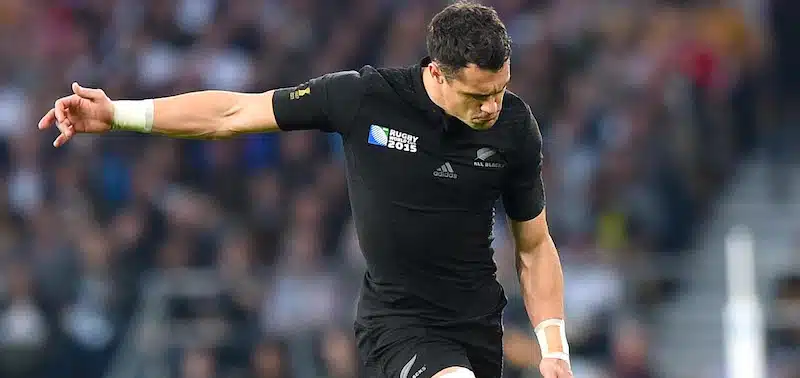
Fly-half: Dan Carter (New Zealand)
Owens said: “There are lots of outside-halves who have been great, but not one who has done it over so many years like Carter.
“Before the 2015 World Cup, some people said he was past his best and wouldn’t make the New Zealand squad for the tournament.
“But for Carter to come back from injury and play as well as he did then is a sign of a special player.”
Scrum-half: Agustin Pichot (Argentina)
Owens said: “I used to love watching Dwayne Peel in his prime as a scrum-half for those few years between 2004-06 with Wales, the Lions and Llanelli. Talented, a great guy, he also has a house just up the road from me!
“But I’ve just plumped for Pichot who was a great player for the Pumas and also a great ambassador for the game of rugby in general.
“Pichot and Felipe Contepomi were the ones who helped transform Argentina into one of the greatest sides in the world. He was an architect behind their march to the World Cup semi-finals in 2007, which set the trend ahead of their excellent showing in the 2015 tournament, too.”
Loosehead-prop: Gethin Jenkins (Wales)
Owens said: “He rarely smiles but has been a terrific player at loose-head prop. When I’ve penalised him and he’s smiled, I know I’d got the decision right!
“But, suffice to say, he hasn’t smiled often when I’ve refereed him. Another who has stood the test of time, which speaks volumes about his ability and character.”
Hooker: John Smit (South Africa)
Owens said: “He led the Springboks to success at the 2007 World Cup in France and against the 2009 Lions and is probably one of the greatest captains I have dealt with. He’s a good man and was a very good player at hooker.”

Tighthead-prop: Phil Vickery (England)
Owens said: “I always had a lot of time for him, found him a decent man, a good player to referee. He wasn’t one of those who would whinge at decisions, he would accept the call and get on with it.
“As a player, at his peak with Wasps during their European runs and with England in 2007, he was a formidable force.
“Just about edges out Carl Hayman, another great player and a pretty honest one as well. When he got it wrong and I penalised him, he would accept it.”

Lock: Alun Wyn Jones (Wales)
Owens said: “A man of few words, he does his talking on the field with his actions. Not only is he a brilliant player and a very good captain but I don’t think I have reffed a match where he hasn’t given absolutely everything.”
Lock: Paul O’Connell (Ireland)
Owens said: “Quite simply he was just an exceptional leader. I have been in charge of games where he pretty much carried his team, whether it was Munster or Ireland, almost on his back and onto victory.”

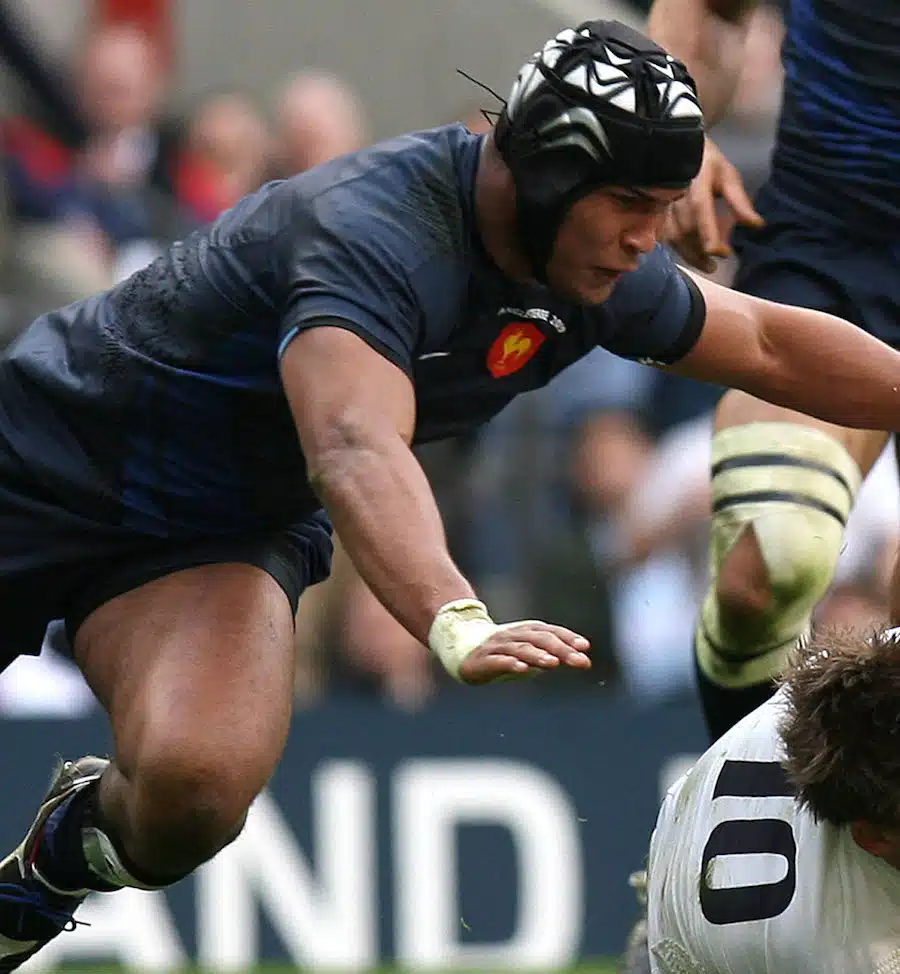
Blindside-flanker: Thierry Dusautoir (France)
Owens said: “My choice as the best skipper I encountered may raise a few eyebrows, but what a captain Dusautoir was. He unfailingly put his body on the line throughout his career — recall the 38 tackles he made when France knocked the All Blacks out of the 2007 World Cup — led by example and understood the game very well.
“Also, he was exemplary in the way he conducted himself.
“There were never any complaints from him over refereeing, not even when borderline decisions went against France. When his team were crushed 62-13 by New Zealand during the 2015 World Cup, he wasn’t tempted to blame anyone.
“He acted as a true leader should act.”
Openside-flanker: Richie McCaw (New Zealand)
Owens said: “Even though there’s been David Pocock and others in this position, how can I not go with Richie?
“If anybody had to pick the greatest player in history, it would surely be a difficult choice between him and Gareth Edwards.
“How McCaw managed to put his body on the line and sometimes the wrong side at rucks for so many years at flanker is incredible.”

Number 8: Sergio Parisse (Italy)
Owens said: “I’ve been fortunate to have refereed some tremendous No.8s during my career but Sergio is tops. He’s such a talented player and rarely has a bad game.
“Maybe there’s a tendency to try and do too much because he’s been in an Italy or Stade Francais team which hasn’t been at its best, but he’s been extraordinary.”
Rugby Quiz:
Rugby is a sport of grit, skill, and resilience, and it’s the players who endure season after season, test after test, who embody these qualities best.
Today, we’re counting down the top 100 men’s capped players in rugby history – athletes whose dedication to their teams has etched their names into the record books.
From powerhouse props to fleet-footed wings, these players have amassed an astonishing number of caps, representing their countries time and again on the world’s biggest stage.
Whether they’ve thrilled fans with dazzling runs, anchored the scrum, or inspired with steadfast leadership, each has contributed to the legacy of rugby in unforgettable ways.
