
The DHL Stormers entered the 2026/27 United Rugby Championship season with expectations rising after a star-studded offseason.
After one round, those expectations have received an early boost. John Dobson's side opened their campaign with a hard-fought 22-15 victory over Connacht in Galway.
The Stomers recovered from a half-time deficit to finish strongly and take four points from a notoriously difficult opening fixture.
Love the Springboks? Follow RUCK's new dedicated South African rugby Instagram page @RUCKBoks today!
The result did not answer every question surrounding the Stormers, but it did provide some encouraging early evidence that the squad has the depth and physicality required to compete on multiple fronts.
With 18 players from the 2021/22 URC title-winning squad still at the club, alongside the return of Siya Kolisi and Cheslin Kolbe and the arrival of Wilco Louw, the Stormers have assembled one of the competition's most formidable squads.
But turning that talent into silverware remains the challenge. Here are the five major obstacles facing Dobson's side.
1. Springbok squad depth vs availability
The Stormers' frontline squad boasts an eye-popping amount of international talent.
The return of Kolisi and Kolbe and the arrival of Louw have added even more Springbok quality to a squad already packed with Test players. But with 15 Springboks in their 56-man squad, national duty, Test matches and travel will inevitably disrupt their strongest line-up during the season.
The opening round offered an encouraging early indication that the Stormers can cope without every star available.
There was plenty of international experience on show in Galway, but the visitors ultimately won through collective power and composure rather than relying on individual brilliance.
The challenge will become significantly greater when the Springboks are away on international duty and the Stormers are also juggling Champions Cup commitments.
Their young players will inevitably be asked to shoulder more responsibility at some point. The early evidence suggests they are capable of doing so, but the depth will be tested much more severely as the season progresses.
2. A 'thin' engine room after high-profile departures
One of the biggest concerns entering the season was the second row.
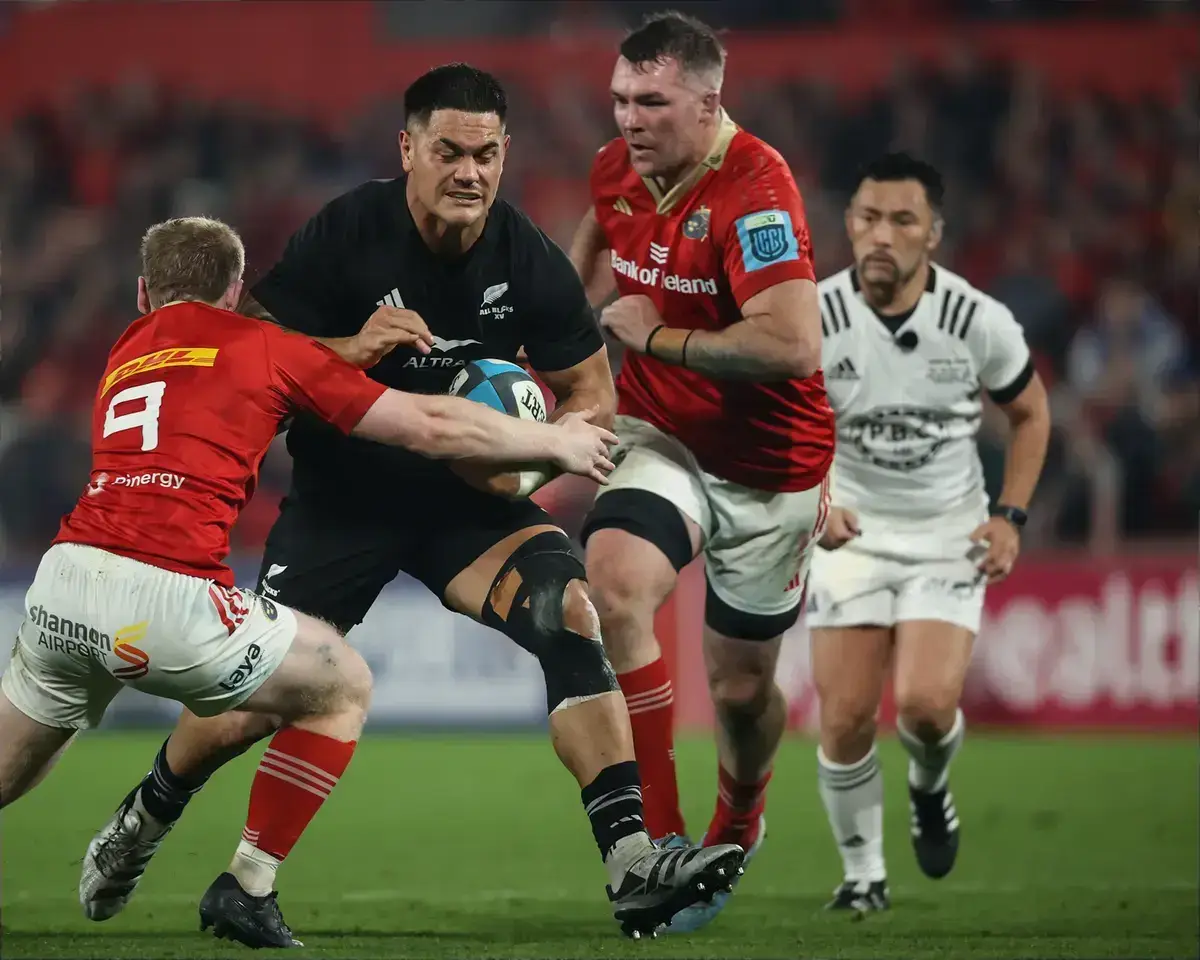
The Stormers allowed two high-profile Springbok locks to leave during the transfer window, with former captain Salmaan Moerat joining La Rochelle and Ruben van Heerden moving to Montpellier.
Replacing that experience and leadership was always going to be difficult.
The opening-night victory in Galway, however, provided some reassurance.
The Stormers were able to withstand Connacht's physical challenge and gradually take control of the contest, particularly after the break.
Their forwards increasingly imposed themselves as the match progressed, helping turn a 12-10 half-time deficit into a seven-point victory.
That is precisely the type of performance Dobson will have wanted to see from his pack.
But the issue has not disappeared. The Stormers will face considerably bigger tests in the URC and Champions Cup, and the fitness and consistency of their second-row options will remain crucial.
One strong performance in Galway cannot completely erase the concerns created by losing two established locks.
3. Injury crisis at scrum-half
The halfback link is crucial to Dobson's attack-minded approach, making the pre-season injuries at number nine a particularly concerning development.
Imad Khan suffered a serious knee injury, while Dewaldt Duvenage has been dealing with an arm injury. Stefan Ungerer's early-season availability was also in doubt.
The Stormers responded by making a late move for Haashim Pead, the 2025 World Junior Player of the Year, from the Lions.
The opening round therefore represented an important early test of the squad's ability to function despite the disruption at scrum-half.
The Stormers ultimately found a way to control the game and, crucially, improve as the contest wore on. Their second-half performance was built around territory, physicality and composure rather than allowing Connacht to dictate the tempo.
That will be encouraging for Dobson. But scrum-half remains an area worth monitoring closely. A long URC season followed by Champions Cup knockout rugby will place enormous demands on the position, and asking a young recruit to immediately become a key player at this level carries obvious risks.
4. Overcoming the difficult tour start
This was perhaps the biggest immediate test of the pre-season concerns. The Stormers opened their campaign in Galway, where South African sides face the additional challenge of playing on Connacht's synthetic 4G surface.
They passed it. After falling 12-10 behind at half-time, the Stormers produced a powerful second-half performance to secure a 22-15 victory.
Connacht had threatened to take control late in the opening 40 minutes, with Mack Hansen and Josh Ioane scoring quick-fire tries to overturn the Stormers' early advantage.
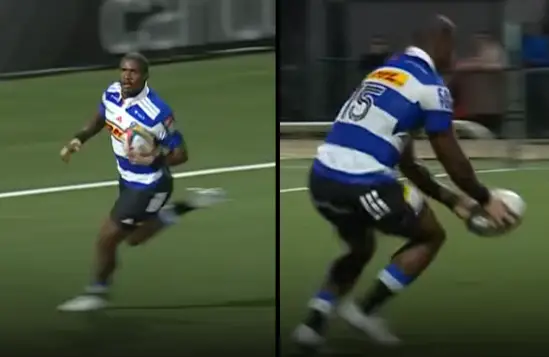
Instead, Dobson's side remained composed. Sazi Sandi's try put the visitors back in front with 25 minutes remaining before late scores from Vernon Paulo and Ezekiel Ngobeni completed the turnaround.
The manner of the victory is arguably as important as the result. Rather than allowing the difficult conditions or a momentum shift before half-time to derail them, the Stormers grew stronger as the game progressed.
That is an encouraging start to a tour that was always going to provide an immediate examination of their credentials.
5. Managing knockout rugby on the road
Ultimately, this is the biggest question facing the Stormers.
They can dominate at home. They have a squad capable of competing with Europe's best. And they have already demonstrated that they can win a difficult away fixture.
But trophies are won in the knockout stages.
The Stormers bowed out 20-11 to Leinster in a gruelling Dublin semi-final last season, once again highlighting the fine margins involved when they have to win away from Cape Town against elite opposition.
The victory over Connacht does not prove that those issues have been solved.
It does, however, provide a positive early indication. The Stormers fell behind, absorbed pressure, adjusted to the conditions and finished the match with the greater physical authority.
Their four tries also came from different phases of the game, with Gelant striking early and Sandi, Paulo and Ngobeni helping finish the job.
That ability to stay composed when a match becomes uncomfortable will be vital when the stakes rise.
The Stormers will need to combine that physical edge with greater tactical discipline and consistency if they are to turn their considerable squad strength into a trophy.