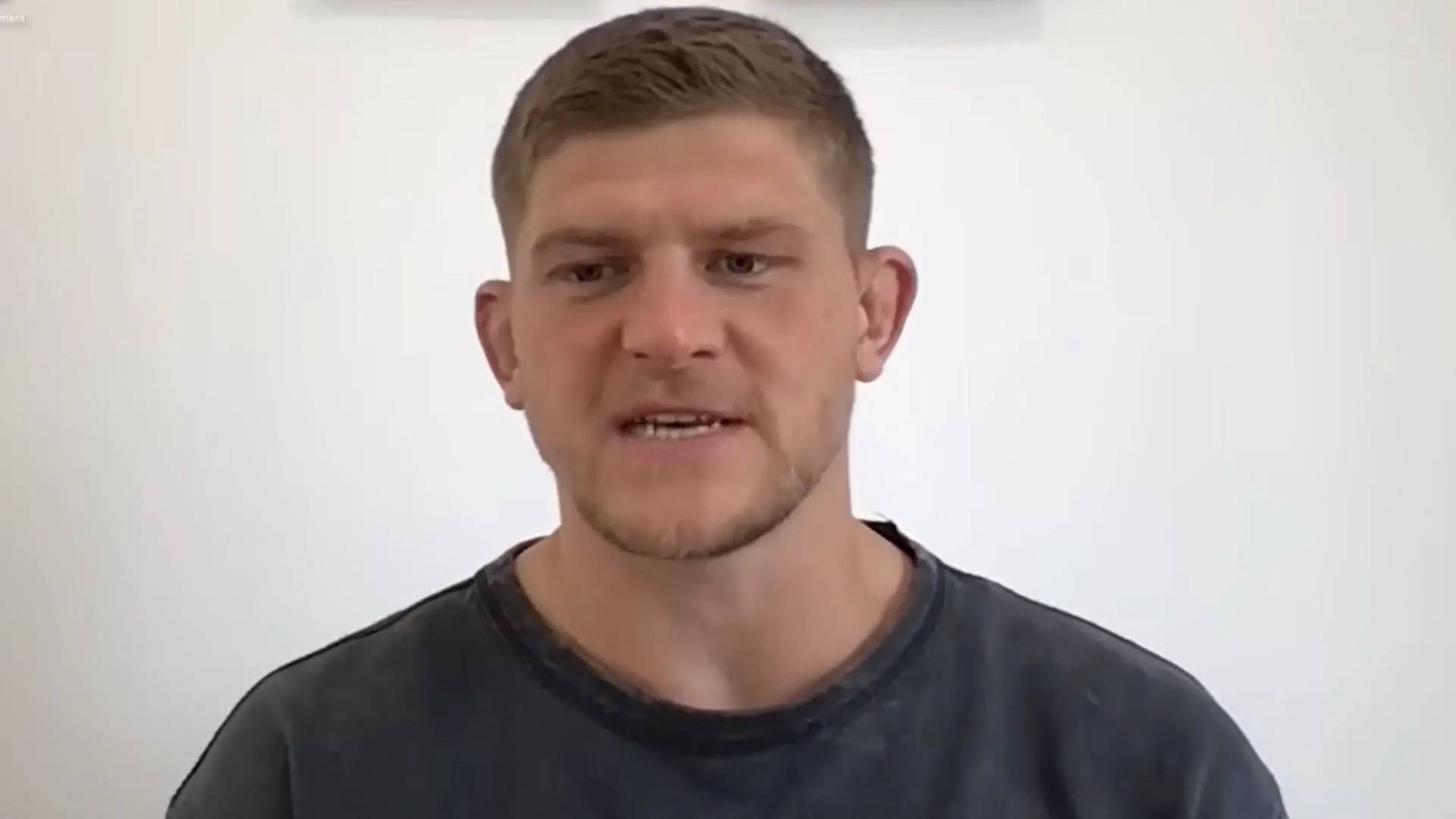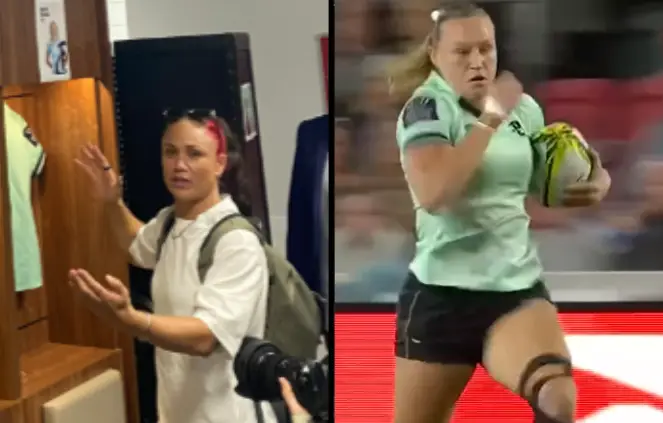

Ruby Tui did not exactly relish the prospect of praising an Australian. But when it comes to Madi Levi, even the Black Ferns legend was prepared to put national rivalries to one side.
Do you love Sevens? Why not follow the brand new @RUCKSevens Instagram account today!
“I don’t like saying it because she’s Australian,” Tui joked. “I don’t like talking about Aussies in England like this, but she’s what the game needs.”
It was quite the endorsement from a player who knows exactly what it takes to become a star of Sevens.
A two-time Olympic medallist including a gold from the Tokyo Games, Tui is also a Rugby World Cup Sevens winner and 2019 World Rugby Sevens Player of the Year. Tui then went on to become a Rugby World Cup winner with the Black Ferns, as she completed a successful shift into the 15-a-side game.
Now, after watching the inaugural Ultimate Sevens season unfold in London, she believes Levi has the opportunity to become something more than an elite player.
“Someone like Madi Levi is actually really important for our game,” Tui told RUCK. “You often get really great players on the field. But I think what Madi’s trying to do, and you can see it, is be a good human as well, a good role model.
“I think she’s really taking charge of herself, and her leadership, and not all athletes do that.
“She’s what the game needs. She’s an absolute world talent — one of the best players on the planet for sure right now.”
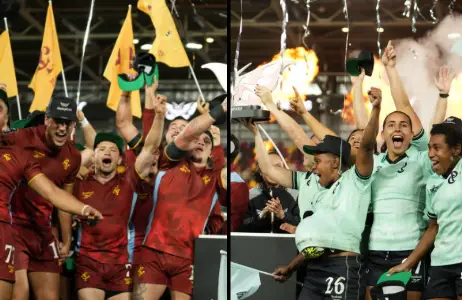
Levi certainly provided the evidence in London. The Australian was one of the standout names of the entire Ultimate Sevens competition, and was named MVP of both Biarritz and the London rounds. Levi scored a hat-trick as Pacific Current defeated Albion Athletic in the women's semi-final, before crossing again in the final against Atlantic Novas.
This inaugural Ultimate Sevens series saw Levi lead Pacific Current to silverware across both France and England, as the Oceanic side emerged as the standard bearers of the women's division.
Levi's opening score in the London final came after Fijian team-mate Reapi Ulunisau burst through the defence with tremendous footwork, with Levi finishing the move as Pacific Current eventually secured a 12-6 victory and became the first Ultimate Sevens women's champions.
For Tui, however, Levi's significance goes beyond the tries. It is about having recognisable, charismatic players who can give supporters a reason to connect with the shorter version of the sport — and who are willing to embrace the responsibility that comes with becoming a role model.
Tui believes Ultimate Sevens can help create more of them.
‘You can’t get that anywhere else in the world’
One of the competition's defining features was its decision to bring together elite players from different countries and rugby cultures to form brand new teams. The sextet of Albion Athletic, Atlantic Novas, Sol Feroz, Pacific Current, Foudre Bleue and Clan Taran created combinations that would rarely exist in the traditional Sevens environment.
For Tui, that creates an opportunity for players to develop parts of their game that can be difficult to test elsewhere.
“People like Jasmin Felix Hotham [New Zealand], the Brazilian girls [Bianca Dos Santos] Silva and [Thalia] Costa, Ellie Boatman [Great Britain] — players like that who are unreal players in their own right — get to test their skill set and their leadership skills with the best of the best,” she said.
“You can’t get that anywhere else in the world.”
That was particularly true of the challenge presented by Ultimate Sevens' mixed squads. Players had to quickly establish relationships with team-mates they might previously have only encountered as opponents, while adapting to unfamiliar coaches, systems and tactical demands.
Tui pointed to one team as the perfect example of what the competition can create. Atlantic Novas, had eight different languages spoken within the squad.
“Breanna's [Nicholas] team, we interviewed her, and she said something that I think sums up this competition,” Tui said.
“She said none of us spoke the same language, so the one language we spoke, and we all know through and through, is speaking rugby. So that’s what we did.”
The result was arguably even more telling. “They came out here on finals day, the bottom-ranked team, and they bloody won their game,” Tui added.
“You know, they knocked out a really class team.” For Tui, it was evidence of players learning to communicate, lead and adapt in an environment they had never previously experienced.
And that, she believes, is where Ultimate Sevens' potential becomes particularly exciting.
‘It forces players to grow tactically’
The competition was deliberately built to be different. Ten-minute matches, continuous play, flexible substitutions and the now-famous red-button timeout all changed the tactical demands on players, while the scoring system introduced the possibility of dramatically changing a match with a kick.
Tui was an immediate fan.
“I love it,” she said. “I think Sevens is an exciting platform, and it’s for people to come together, but it’s also mainly about people having a good time.”
But beneath the entertainment, she sees a serious developmental benefit. “It forces players to grow tactically because it’s different out here.”
The three-week tournament certainly appeared to evolve as it progressed, with teams and coaches becoming increasingly comfortable with the format. Tui believes that development could become significant if the competition is given time to mature.
“You can just see it,” she said. “I think in just these three weeks, the teams, the tactics and the coaches have all grown.
“I actually can’t wait to go and see the girls and talk to them about all the ways they’ve grown, because I think there’ll be ways that you just don’t even think about — the leadership talking in the huddle, having to do the interviews.”
Then comes the tantalising projection.
“I think you can see the growth in three weeks,” Tui said. “You just imagine that over three years would be unreal.”

Ruby Tui
There were inevitably teething problems in a brand-new competition, Tui acknowledged, but she was more interested in the willingness to actually try something different.
“There are obviously always going to be baby steps, teething issues, but I’m just so proud of this team, how they got together and actually did something,” she said. “They actioned it, bro.”
‘Ultimate Sevens is giving massive opportunities for coaches’
The opportunities, in Tui's eyes, extend beyond the players. Former New Zealand team-mate Kelly Brazier was among those coaching during the tournament, as the Black Ferns legend took on the head coach role with Cardiff champions Atlantic Novas.
Tui believes it is a natural progression for a player whose rugby intelligence has always been obvious.

Ruby Tui and Kelly Brazier
“Kelly Brazier, mate, she’s just one of those minds that will always, forever, just see code,” Tui said.
“Even when I played next to her, mate, she was coaching us. She’s seen the game differently. She was ahead of coaches when she was still playing. So for her to coach, I think it’s a natural step.”
Brazier's existing coaching work with New Zealand's women's XVs and Sevens sides made Ultimate Sevens another environment in which she could develop.
“She has part-time roles in New Zealand, coaching the women’s XVs and Sevens,” Tui said. “But something like this, she can just sink her teeth into.”
And that is another part of the competition's appeal for Tui.
“Not only for players, but Ultimate Sevens is giving massive opportunities for coaches.”
‘Not many people actually stand up and do it’
Ultimately, though, Tui's strongest praise was reserved for the people who took the risk of creating Ultimate Sevens in the first place.
The London finals provided the clearest demonstration yet of what they had built.
The men's final went down to the wire, with Sol Feroz producing another late twist before the decisive conversion, creating the kind of atmosphere Tui believes Sevens is capable of delivering at its best.

Ruby Tui at the Ultimate Sevens Final.
“I think Mitch [Tom Mitchell] and Barney [Pascall - both Directors] and the Ultimate Sevens team have just done such an amazing job,” she said.
“Everyone wants to do something like this. But not many people actually stand up and do it.
“I’m just really proud to know people like that who are willing to put their name on the line and put a lot of risk into, I think, a very worthy reward.”
The reward, Tui believes, was visible inside the Gtech Community Stadium.
“I think London really summed up where this tournament can go and how amazing it can be,” she said.
“I don’t know if you felt that in the stadium on that four-point kick to win the game, bro. I just haven’t felt that in a long time.”
For Tui, the inaugural season was therefore about more than simply crowning six teams and two champions.
It was about giving players new challenges, creating opportunities for coaches, developing new personalities and, perhaps most importantly, proving that someone within rugby is still willing to try something different.
Tui has known Ultimate Sevens co-founder Tom Mitchell for several years, and believes there is one quality at the heart of the entire project.
“He’s a good guy,” she said. “The one thing he always has is the love of the game.
“So I think all you need is the love of the game, and sometimes you do pretty special things.”