
Who makes the ultimate World XV right now?
Join RUCK’s Instagram broadcast channel and get the latest rugby news straight to your phone.
The Rugby’s Greatest Rivalry series has already delivered a major shake-up to the international rugby landscape.
The All Blacks delivered a stunning 33-16 win over the Springboks at Ellis Park, ending South Africa’s 12-Test winning run and providing fresh evidence for several players pushing their claims to be considered the best in the world. New Zealand’s victory was built around outstanding individual performances from the likes of the likes of Will Jordan, Jordie Barrett and Cam Roigard all at full flight.
Deciphering a World XV based on current form is hard to determine at this stage of the year, with the All Blacks tour of South Africa providing the sole tier one international rugby action across the global calendar. We are a week removed from the Wallabies' 2-0 test series win over Japan, and counting down the days until club rugby resumes in the Northern Hemisphere next month.
With this all considered, there are several changes to our updated World XV for late August 2026. Some players have retained their places, while others have forced their way into the side. There are also two positional switches worth highlighting, as two sensational All Blacks remain in the World XV albeit whilst wearing new numbers on their backs.
So, who makes the ultimate World XV right now?
UPDATED: RUCK’S WORLD RUGBY XV
15. WILL JORDAN – NEW ZEALAND & CRUSADERS
REPLACES: THOMAS RAMOS – FRANCE & TOULOUSE
Despite excelling on the wing in the phenomenal series opener against the Springboks, Jordan’s extraordinary all-round performance earns him the No.15 jersey, with a new face out wide. Jordan has always possessed the skillset to operate at full-back for Canterbury, the Crusaders and the All Blacks, even with Dave Rennie unleashing New Zealand's all time record men's try scorer along the right touch-line.
His latest performances have strengthened the argument that he belongs in the World XV. That versatility allows him to move back into the position here without sacrificing any of the qualities that make him one of the world's most dangerous attackers. Against South Africa, Jordan immediately showed his predatory instincts, spotting space before finishing clinically for the opening try. He added another score after the break and was involved in creating further opportunities, while his work without the ball was equally impressive, including a superb turnover.
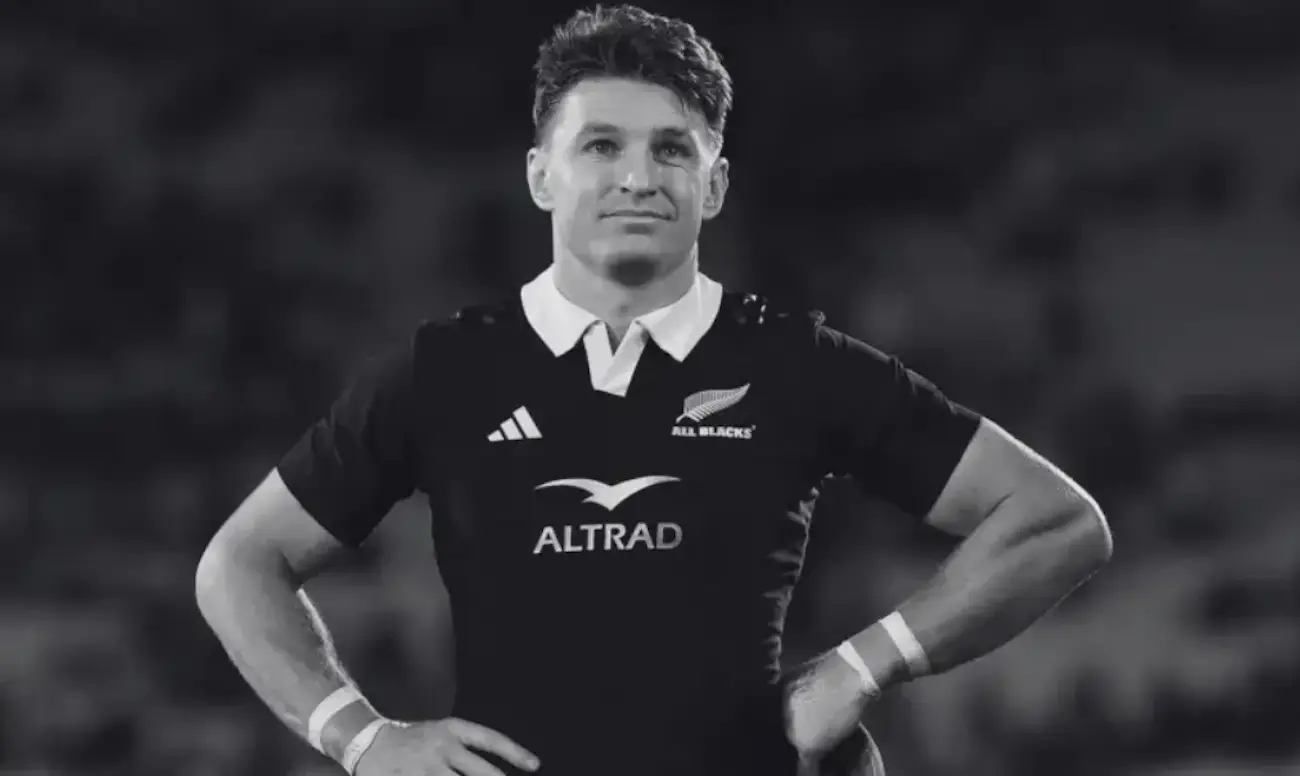
New Zealand ultimately scored five tries in their 33-16 victory, with Jordan responsible for two of them. His combination of pace, finishing, rugby intelligence and ability to operate from deep makes him an increasingly difficult player to leave out. Jordan takes the 15 spot thanks to a second strong performance at 14 in the very same test, and how no current full-back is on his level, with Damian McKenzie, Beauden Barrett and Damien Willemse all a step away from their best at this current moment.
14. CHESLIN KOLBE – SOUTH AFRICA & STORMERS
REPLACES: WILL JORDAN – NEW ZEALAND & CRUSADERS
Kolbe’s influence against New Zealand showed why he remains one of the world’s most dangerous wings. Cheslin Kolbe returns to the World XV after another hugely influential performance against the All Blacks. The Springbok winger was only on the field for 58 minutes before being forced off with an injury, but his departure coincided with South Africa losing control of the contest.
Before leaving, Kolbe had been perfect from the kicking tee, scoring 11 points through three penalties and a conversion. His value extends far beyond goal-kicking. Kolbe remains one of rugby’s most elusive attackers, capable of beating defenders in confined spaces and creating something from almost nothing. The fact that South Africa's attack appeared to lose another dimension after his departure only underlined his importance.
13. JESSE KRIEL – SOUTH AFRICA & CANON EAGLES
RETAINS PLACE
Kriel’s consistency and defensive reliability continue to make him one of the world’s leading outside centres. Kriel remains the midfield constant in a Springboks side renowned for rotation. His latest performance against New Zealand was slightly different from his usual attacking influence. After Kurt-Lee Arendse was forced off following a head injury, Kriel was moved to the left wing during the early stages of the Test and consequently spent much of the afternoon concentrating on his defensive responsibilities.
That versatility is another reason he remains in the XV. Kriel can comfortably move around the backline without his defensive standards dropping, while his experience continues to provide stability in an often-changing Springbok backline.
12. JORDIE BARRETT – NEW ZEALAND & HURRICANES
RETAINS PLACE
Barrett was at the heart of New Zealand’s victory, combining outstanding attacking decision-making with huge defensive work. Barrett once again demonstrated why he is arguably the most complete inside centre in Test rugby.
The All Blacks initially had to survive on scraps against South Africa, but Barrett made virtually every opportunity count. His decision-making in attack was outstanding, while his ability to operate as a secondary playmaker gave New Zealand another route through the Springbok defence.
Perhaps more importantly, Barrett stood up to the physical challenge without the ball. He made 15 tackles and won five turnovers as New Zealand repeatedly disrupted South Africa's possession. It was the sort of complete midfield performance that perfectly explains why he retains his place.
11. LOUIS BIELLE-BIARREY – FRANCE & BORDEAUX-BÈGLES
RETAINS PLACE
Back-to-back Six Nations Player of the Championship awards make the French winger impossible to dislodge, even with Bielle-Biarrey not featuring in the Nations Championship, as he gears up for his club return.
Louis Bielle-Biarrey has rapidly become one of rugby’s most devastating finishers. After scoring eight tries in the 2025 Six Nations, he somehow raised the standard again with nine in France’s 2026 title-winning campaign. His four-try display against England was the obvious highlight, but his consistency is arguably more impressive.
Explosive acceleration, outstanding anticipation and an instinct for finding space have made the 22-year-old one of the game’s most feared attackers. Even with the Southern Hemisphere's heavyweights in action, there is no moving the French flyer from our World XV for now.
10. RUBEN LOVE – NEW ZEALAND & HURRICANES
REPLACES: FINN RUSSELL – SCOTLAND & BATH
Love’s rise to the All Blacks No.10 jersey has accelerated dramatically after another composed performance against South Africa. Love has gone from promising prospect to one of the most intriguing fly-half stories in world rugby.
The Hurricanes playmaker entered the Rugby’s Greatest Rivalry series facing enormous competition for the All Blacks' No.10 jersey, with Richie Mo’unga, Damian McKenzie, Beauden Barrett and Josh Jacomb all in the wider conversation. Love is now holding onto the shirt, and we back him to take over the spot in our current World XV from the one and only Scotland maverick Finn Russell.
Against South Africa, he remained composed throughout a brutally physical Test and successfully converted four of New Zealand’s five tries. He was not the most influential All Black in attack, with Jordie Barrett and Cam Roigard taking much of the creative responsibility, but Love continually looked to inject himself into the game and showed several threatening moments.
The most impressive aspect is how quickly he has adapted to Test rugby. With the pressure of the Springboks at Ellis Park providing his biggest examination yet, Love looked increasingly comfortable.
9. CAM ROIGARD – NEW ZEALAND & HURRICANES
RETAINS PLACE
Roigard’s tempo, decision-making and control against South Africa further strengthen his claim as the world’s leading scrum-half, as an all-Wellington axis is formed at the halfbacks.
Cam Roigard was superb once again on both sides of the ball. His box-kicking was accurate and provided New Zealand with an important territorial weapon, while his decision-making when the All Blacks had attacking opportunities was consistently excellent. His pass for Will Jordan's opening try was particularly impressive, quickly putting Jordan into space and allowing New Zealand to exploit the Springboks' defensive structure.
Roigard's ability to change the speed of a game is becoming one of his defining qualities. He can slow proceedings down with a perfectly weighted kick before suddenly injecting enormous tempo when an opportunity appears. His partnership with Love and Jordie Barrett is developing rapidly, as the Hurricanes form a crucial spine within Dave Rennie's New Zealand back-line.
1. OX NCHE – SOUTH AFRICA & SHARKS
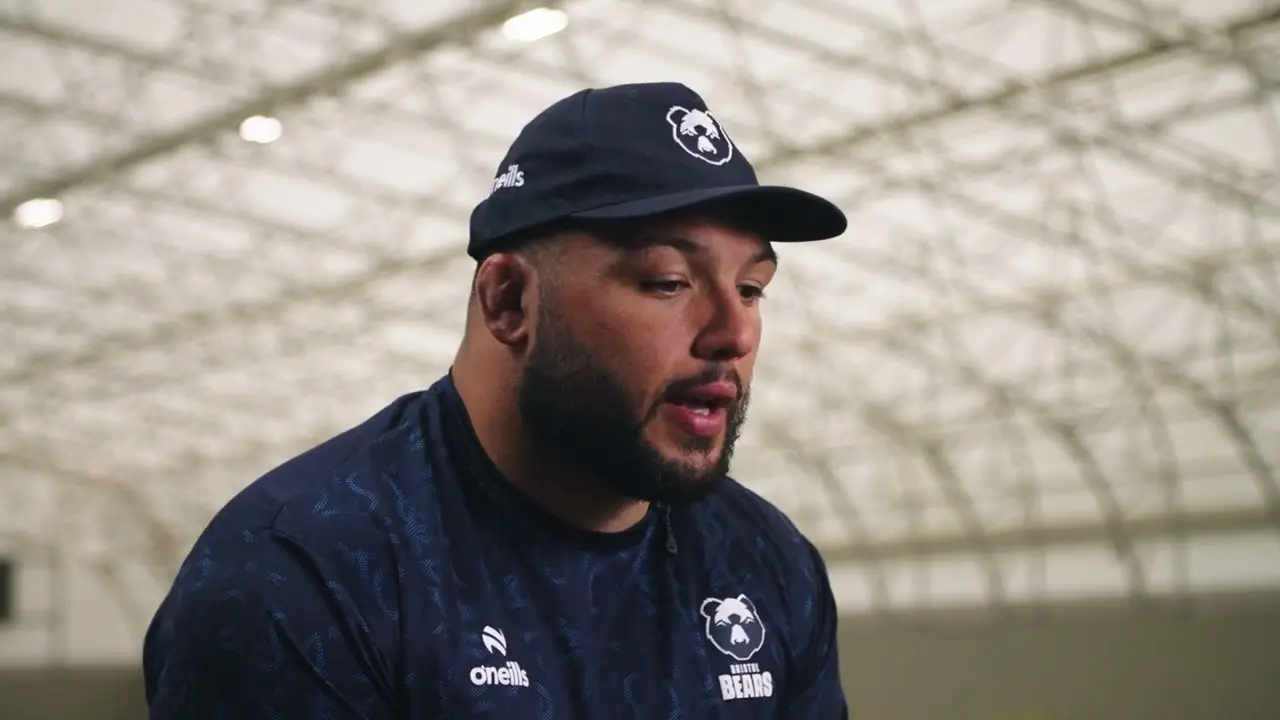
REPLACES: ELLIS GENGE – ENGLAND & BRISTOL BEARS
Ox Nche’s dominant scrummaging performance against New Zealand pushes him into the World XV. Nche has forced his way into the conversation with a dominant performance against the All Blacks. Returning to the starting side after spending time on the sidelines with injury, the Springbok loose-head immediately reminded everyone why he is regarded as one of the world's elite scrummagers.
Nche repeatedly put Tyrel Lomax under pressure at the set piece before being replaced by Gerhard Steenekamp in the 46th minute. The Springboks' scrum was one of the few areas in which South Africa held a clear advantage, despite ultimately losing the Test 33-16.
With Ellis Genge now set to return to Bristol Bears, his place is up for grabs in our World XV. A strong return to club rugby followed by another monstrous Nations Championship campaign in November could put the England prop straight back into contention. For now, however, Nche gets the nod.
2. MALCOLM MARX – SOUTH AFRICA & KUBOTA SPEARS
RETAINS PLACE
The reigning World Rugby Player of the Year remains the benchmark at hooker. Malcolm Marx continues to redefine the modern No.2. The Springbok was involved from the opening exchanges against New Zealand, carrying aggressively and coming agonisingly close to scoring in the first half before losing the ball as he crossed the line.
He was forced to play the full 80 minutes and emptied the tank with a succession of powerful close-range carries. He also won a turnover, underlining the all-round influence that has made him one of the most complete forwards in the game. Even in defeat, Marx's performance was another reminder of why he remains at the top of the hooker conversation.
3. WILCO LOUW – SOUTH AFRICA & STORMERS
REPLACES: THOMAS DU TOIT – SOUTH AFRICA & SHARKS
Louw starred against the All Blacks and took his opportunity to underline his credentials as one of the world's best tight-heads. Wilco Louw has forced his way into this XV through sheer performance.
With Thomas du Toit not involved in the Test, Louw was given the opportunity to start against New Zealand and delivered a powerful scrummaging display. He repeatedly put Ethan de Groot under pressure and helped establish South Africa's dominance at the set piece during the opening stages.
That performance matters because tight-head is one of the most competitive positions in world rugby. Louw has now provided a serious reminder that his name belongs in the conversation alongside the very best. For now, his performance at Ellis Park earns him the No.3 jersey, but with Du Toit named to face the All Blacks in Cape Town, this appearance could be short lived.
4. WARNER DEARNS – JAPAN & TOSHIBA BRAVE LUPUS / HURRICANES
RETAINS PLACE
Dearns’ extraordinary rise and Super Rugby title-winning campaign continue to make him impossible to ignore. The 'one that got away' for the All Blacks, has gone from exciting prospect to genuine world-class lock in remarkably little time.
His 2026 sabbatical with the Hurricanes saw him thrive in Super Rugby Pacific, helping the Wellington franchise lift the title while showcasing an extraordinary blend of size and athleticism.
The Japan international can dominate the lineout, carry in space and contribute at the breakdown. New Zealand’s interest in his services only underlines how rapidly his reputation has grown. Top performances in Tokyo and Townsville has only elevated his standing upon the international stage.
5. FABIAN HOLLAND – NEW ZEALAND & HIGHLANDERS
REPLACES: TADHG BEIRNE – IRELAND & MUNSTER
Holland’s outstanding return to Test rugby culminated in a crucial try against South Africa. Fabian Holland made a huge statement in his return to international rugby. It was a major call from Dave Rennie to bring the lock back into the starting side after only two appearances for New Zealand since November, but Holland repaid that faith with an outstanding performance.
His defining moment came immediately after half-time, when he timed his charge perfectly to block Grant Williams' box kick and score one of the most important tries of the match. Holland also contributed strongly at the set piece and provided the physicality New Zealand needed against the Springboks, as Rennie's men took a 1-0 series lead.
6. PIETER-STEPH DU TOIT – SOUTH AFRICA & TOYOTA VERBLITZ
RETAINS PLACE
Du Toit remains one of the most complete forwards in world rugby despite South Africa’s defeat. Pieter-Steph du Toit once again produced the sort of all-round performance that has made him a two-time World Rugby Player of the Year.
The stand-in Springbok captain carried hard, defended strongly and provided an important lineout option against New Zealand with Siya Kolisi once again out with a hamstring issue.
He was ultimately kept in check by an All Blacks defence that became increasingly dominant after half-time, but Du Toit continued to work tirelessly throughout the contest. His versatility and ability to influence almost every aspect of a Test make him extremely difficult to leave out.
7. ARDIE SAVEA – NEW ZEALAND
REPLACES: FRASER MCREIGHT – AUSTRALIA & REDS
Savea’s ability to dominate from No.7, combined with his experience of playing there for Kobe Steelers, makes the positional switch possible. Ardie Savea moves from No.8 to openside flanker — but this is not a positional experiment.
The All Blacks captain has already demonstrated his ability to operate from the flank during his time with the Kobe Steelers in Japan Rugby League One, where he was listed as a flanker during the 2025/26 campaign. Against South Africa, Savea was initially operating behind a platform that was going backwards, but he became increasingly influential after half-time.
His surge off the back of a scrum helped create the platform for Luke Jacobson's try, while his turnover late in the match directly contributed to the pressure that eventually saw South Africa reduced to 13 men. That is Savea at his best: explosive, intelligent and capable of deciding a Test through one piece of individual brilliance. Moving him to No.7 also allows us to accommodate another outstanding No.8.
8. JASPER WIESE – SOUTH AFRICA & URUYASU D-ROCKS
REPLACES: ARDIE SAVEA – NEW ZEALAND & KOBELCO KOBE STEELERS
Wiese's barnstorming performance against the All Blacks underlines his credentials as one of the world's most destructive No.8s. Jasper Wiese was one of the few Springboks to consistently punch holes in the All Blacks defence during the opening Test.
The South African was effectively a human battering ram with ball in hand, producing several barnstorming carries that forced New Zealand's defenders into retreat. He finished with a match-high 63 metres from 17 carries, providing South Africa with valuable front-foot ball even when the wider attack struggled to generate momentum.
His championship pedigree also strengthens the argument. Wiese played an important role in South Africa's 2023 Rugby World Cup triumph, while previously helping Leicester Tigers win the Gallagher Premiership title. Against New Zealand, however, it was his sheer physicality that stood out. With the Springboks struggling to build sustained attacking pressure, Wiese repeatedly provided the momentum they needed.
He may not have been able to drag South Africa over the line at Ellis Park, but his individual performance strengthened the argument that Wiese belongs among the world's elite No.8 - and deservedly takes the last spot in our World XV.
LATEST RUGBY NEWS
- Why the All Blacks’ fly half debate is FINISHED following win over Springboks
- Otago captain makes All Blacks statement in riotous win over Wellington
- 5 Changes Rassie Erasmus MUST Make for Springboks v All Blacks 2nd Test
- Confirmed Springboks team to face All Blacks: Sacha Feinberg-Mngomezulu DROPPED
- Three All Blacks who flopped against the Springboks – and who should replace them