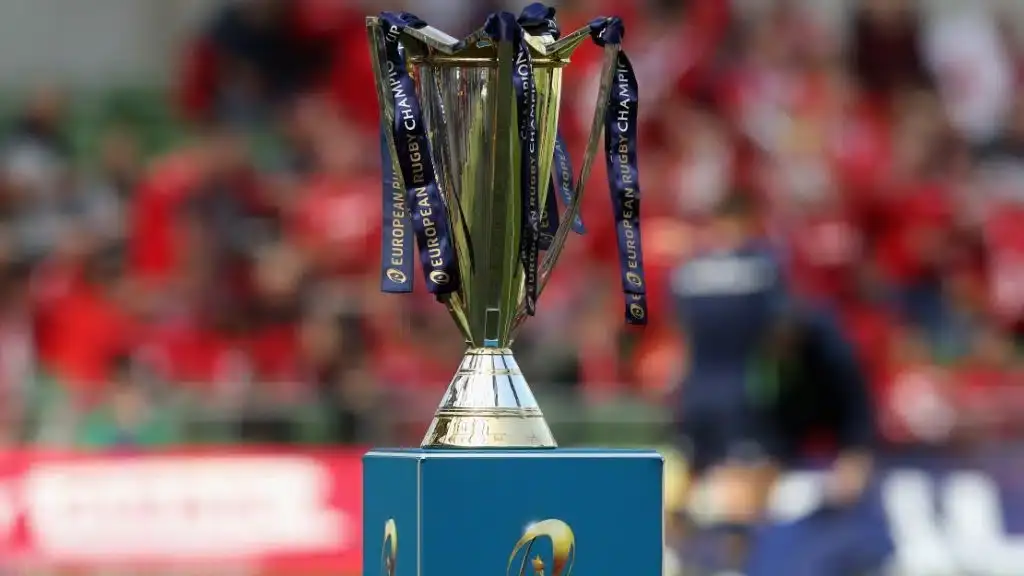

With origins traced back to the dawn of the professional era in 1995, European club rugby is quite the unique beast.
For each European giant like Toulouse, Leinster or RC Toulon, there have also been a fair share of rather forgettable failed experiments.
Join RUCK’s Instagram broadcast channel and get the latest rugby news straight to your phone.
From invitational teams who enjoyed brief cameos in Europe, to emerging international sides that had the chance to mix it up with the elite clubs, the history of the Champions Cup and Challenge Cup is packed with some unexpected hidden gems.
Having showcased the very best of the Northern Hemisphere for two and a half decades, the Champions Cup and Challenge Cup has since opened their doors to South Africa's premier clubs.
Throw into the mix the annually invited duo of Georgia's Black Lion and the nomadic Toyota Cheetahs, and there is plenty of vibrant variety to enjoy each time the competition comes around.
The 2026/27 Investec Champions Cup and EPCR Challenge Cup kicks off this weekend, with club sides from the URC, PREM Rugby and Top 14 all set for fierce opening rounds.
In this article, we take a look back upon a collection of teams from the history of the tournaments that have not fallen to the annals of history.
10 Forgotten Champions Cup and Challenge Cup Teams
1. Portugal XV
The expansion of European club rugby beyond its traditional strongholds brought some unusual participants into the Challenge Cup. Among them was Portugal XV, a representative side included in the 1998–99 competition.
The circumstances surrounding these selections remain difficult to establish from the available records. It is unclear whether Portugal XV was officially recognised as a national representative team or operated as an invitational selection, similar to the likes of an 'All Blacks XV' or an Emerging Ireland.
Portugal XV were placed in Pool 3 of the restructured Challenge Cup, which featured three expanded pools of seven teams. The campaign proved a difficult introduction to the competition, with the Portuguese side suffering six consecutive defeats.
Their opening fixture ended in an emphatic 85–7 defeat against French outfit Brive. Further heavy losses followed against Biarritz (62–11), Pau (78–0) and Agen (81–13), as Portugal XV struggled to match the established professional clubs.
There were brighter moments, however. A high-scoring encounter with Welsh club Bridgend ended in a 45–24 defeat, while a much tighter contest against Romanian outfit Dinamo-București finished 23–18.
Although the results made for difficult reading, Portugal XV's inclusion represented an intriguing attempt to broaden the reach of European club rugby. Their brief appearance remains an unusual footnote in the competition's early history.
2. Spain XV
Portugal's Iberian neighbours were also represented in the 1998–99 Challenge Cup, with Spain XV drawn into Pool 1.
As with Portugal XV, the precise status of the Spanish selection is difficult to establish from the surviving competition records.
Nevertheless, their participation formed part of an ambitious attempt to extend European rugby's reach beyond its established professional leagues.
Spain XV endured a similarly challenging campaign, losing all six of their pool fixtures. Their opening defeat came against French side Bourgoin, who ran out 55–10 winners.
The Spanish selection subsequently suffered further heavy defeats against Castres (61–15), Montferrand (88–13) and Dax (41–0).
The results underlined the gulf between the established French clubs and the representative sides.
There were closer encounters along the way. Spain XV narrowly lost 25–21 to Italian side Roma before finishing their campaign with an 18–6 defeat against Welsh club Aberavon.
Ultimately, the Iberian experiment failed to deliver competitive results. However, the inclusion of Portugal XV and Spain XV remains a fascinating example of the Challenge Cup's early willingness to experiment with its format and geographical reach.
3. CS Bourgoin-Jallieu
CS Bourgoin-Jallieu occupy a special place in European rugby history as the winners of the inaugural Challenge Cup in 1997.
The competition was established in 1996 alongside the debuting Heineken Cup, creating a second European tournament for clubs that had not qualified for the continent's premier competition.
French sides quickly established their dominance, and the inaugural campaign was no exception.
Seven of the eight quarter-finalists came from France, with Northampton Saints the only English representative to reach that stage.
Their campaign ended against Narbonne, leaving an all-French semi-final line-up.
Bourgoin overcame Narbonne to set up a final against Castres Olympique. Played in Béziers, the contest ended in an 18–9 victory for Bourgoin, securing the first European Challenge Cup title.
Bourgoin returned to the final in 1999, only to lose 35–16 against Montferrand, the club now known as Clermont Auvergne.
They reached the showpiece again in 2009, when Northampton Saints denied them a second title with a 15–3 victory.
Despite their European pedigree, Bourgoin's fortunes subsequently declined amid financial difficulties in the early 2010s. The side now currently plays in the Nationale Division, in the third tier of France.
Their story illustrates how quickly the landscape of professional rugby can change, even for a club that helped establish the foundations of European competition.
4. Pontypridd
Pontypridd enjoyed one of the most memorable runs by a Welsh club in the early years of the European Challenge Cup.
The Welsh side entered the competition in 2001 after missing out on qualification for the Heineken Cup.
They made the most of their opportunity, finishing top of their pool with four victories from six matches against Leeds Tykes, Béziers and Parma.
Their progress continued into the knockout stages, where Pontypridd recorded a hard-fought 17–15 victory over Saracens.
That result set up a semi-final against London Irish, and another thrilling encounter saw the Welsh side prevail 33–27 to reach the final.
Pontypridd's opponents in the showpiece were Sale Sharks, who eventually edged a gripping contest 25–22. The defeat denied the Welsh club a European trophy but confirmed their ability to compete with established English Premiership opposition.
The campaign came during a successful period for Pontypridd, who had also won the Welsh Principality Cup.
Yet European silverware proved elusive, with the runners-up finishing just three points short of Sale.
The final was played for what was then known as the Parker Pen Shield, another reminder of the changing names and sponsors that have characterised European rugby's second-tier competition.
5. Wasps
London Wasps are best remembered for their domestic dominance and success in the Heineken Cup, but their European Challenge Cup triumph in 2003 was another important milestone in the club's history.
Wasps entered the competition after finishing seventh in the 2001–02 Premiership season.
It was an unremarkable league campaign for a side that would soon become one of English rugby's dominant forces, but the Challenge Cup provided an opportunity to build momentum.
Their progress through the tournament was emphatic. Wasps recorded an 82–24 aggregate victory over Italian side Parma before dispatching Bordeaux-Bègles 72–29 across two legs.
Further victories over Stade Français and Pontypridd secured a place in the final against domestic rivals Bath.
The final proved a high-scoring affair, with Wasps running out 48–30 winners to lift the European Challenge Cup.
The triumph formed part of a memorable 2002–03 campaign in which former England captain Lawrence Dallaglio spear-headed the team that also won the Premiership title.
That double marked the beginning of an extraordinary period for Wasps, who went on to establish themselves among Europe's leading clubs.
Their subsequent Champions Cup successes often overshadowed the Challenge Cup victory that helped launch their most successful era.
Wasps' story also serves as a reminder of the financial pressures facing professional rugby clubs.
The club's collapse in 2022 brought an abrupt end to its established professional identity, adding another chapter to the history of one of English rugby's most successful sides.
6. Dinamo-București
Romanian club Dinamo-București played an important role in the early expansion of European club rugby, helping introduce the competition to countries outside the traditional Five Nations.
In 1996, Dinamo and Italian side Petrarca became the first clubs from outside the Five Nations to participate in a major European club competition.
Their involvement was significant for Romanian rugby, which had a strong domestic tradition but limited exposure to the developing European club structure.
Dinamo's opening matches proved difficult, with defeats against French sides Narbonne and Castres. However, the Romanian club rallied in the latter stages of the pool campaign.
A 24–24 draw against Welsh side Bridgend delivered an important result before Dinamo recorded a 38–31 victory over Treorchy.
Their most notable success came in the final round, when they snatched a win past Bristol 19–18.
The results represented a respectable campaign against stronger-established opposition, with Narbonne and eventual finalists Castres setting the pace in the pool.
Dinamo returned to the Challenge Cup the following season, before Romanian representation increasingly shifted between domestic clubs and composite selections.
In 2005, Dinamo's involvement ended as the newly formed București Rugby project pursued European competition on behalf of Romania.
The project used an invitational selection model, drawing players together in a manner comparable to a touring representative side.
7. Colomiers Rugby
Colomiers Rugby enjoyed one of the most impressive campaigns in the early history of the European Challenge Cup, winning the competition in 1998.
The French club reached the final after navigating a difficult knockout route, including victories over Clermont and Stade Français. Their reward was an all-French final against Agen, played in Toulouse.
Colomiers delivered a commanding performance, winning 43–5 to claim the European title. The result remains one of the most emphatic victories in the competition's finals history.
The triumph was particularly significant given the strength of French rugby during the tournament's formative years.
Clubs from France were regular contenders for the trophy, but Colomiers distinguished themselves with a campaign that culminated in a comprehensive final victory.
Their European success was part of a wider period of achievement for the club, which reached the final of the French championship in 2000.
However, Colomiers did not establish themselves as a permanent fixture among France's leading clubs, as the side dropped all the way down to Federale 1, yet have featured in the Pro D2 [second tier] for 14 consecutive seasons.
Their European triumph is consequently less familiar to many modern rugby supporters than the successes of better-known French sides.
Yet the 1998 campaign remains an important chapter in the history of the Challenge Cup and a reminder of the opportunities the competition provided for ambitious clubs outside the traditional elite.
8. London Irish
London Irish were one of English rugby's most beloved clubs, with a proud history and a reputation for high-energy and at times 'reckless' rugby.
Their run to the 2006 European Challenge Cup final offered a golden chance to secure continental silverware. The Exiles faced Gloucester in a final that developed into one of the competition's most dramatic encounters.
The sides were locked at 31–31 after 80 minutes, with London Irish fighting back through two late driving-maul tries to force extra time.
The contest remained finely balanced before Gloucester's James Forrester scored a decisive try in the second period of extra time.
Gloucester eventually prevailed 36–34, leaving London Irish agonisingly short of the trophy.
The club continued to compete in the Premiership and European rugby in the years that followed, but financial difficulties post-pandemic eventually brought their professional existence to an end in 2023.
With reports of a buyer firmly in the rumour mill, the hope is that London Irish will follow the phoenix like resurgence to that of Worcester Warriors in years to come.
9. Leeds Tykes
Leeds Tykes enjoyed a relatively brief period in English rugby's top flight, but their rise included some notable domestic and European achievements.
The club established itself in the Premiership in the early 2000s and qualified for the Heineken Cup for the first time after finishing fifth in the league in 2002–03.
Their most celebrated achievement came in 2005, when Leeds won the Powergen Cup at Twickenham.
A victory over Bath secured the trophy and earned the Yorkshire club another place in the Heineken Cup for the following season, with the likes of England and British & Irish Lions legends Mark Regan and Iain Balshaw on the roster.
Leeds' European campaign in 2005–06 offered a rare opportunity to test themselves against the continent's leading clubs.
They competed in a pool containing Perpignan, while also navigating the demands of domestic rugby.
The Tykes' spell among the Premiership elite proved relatively short. After five consecutive seasons in the top flight, they were relegated in 2006. The Tykes now play in National League 1, which is the third division of English rugby.
The club's story is particularly interesting because of its place in the development of rugby in Yorkshire. The professional set-up also helped establish an academy that produced a number of players who went on to enjoy England careers such as Danny Care and Luther Burrell.
10. Biarritz Olympique
Biarritz Olympique were once among the most formidable clubs in French rugby, combining domestic success with memorable European campaigns.
The Basque side reached the Heineken Cup final in 2006, where they faced Munster in one of the defining matches of that season. Although Biarritz lost 23–19, the run underlined their standing among Europe's elite.
Their European story did not end there. In 2012, Biarritz returned to a continental final, this time in the Challenge Cup, where they faced Toulon at the Twickenham Stoop.
The final was a tense contest, with Biarritz triumphant in a 21–18 victory. Fly-half Dimitri Yachvili played a decisive role with his goal-kicking, helping secure the trophy in difficult conditions.
The victory offered Biarritz another European honour and demonstrated the depth of their achievements across both continental competitions.
Few clubs could point to such a strong combination of domestic pedigree, a Heineken Cup final appearance and Challenge Cup success.
However, the club's fortunes subsequently declined, and Biarritz fell away from the upper reaches of French rugby. During their golden era (2002–2012), Biarritz won three Top 14 titles and reached two Heineken Cup finals.
However, the club relied heavily on massive financial backing from corporate sponsors. When that funding began drying up, they could no longer compete with the exploding budgets of rival French clubs and Biarritz was relegated from the Top 14 in 2014.
Aside from a single-season cameo back in the top flight in 2021/22, they have been stuck in the second tier [Pro D2] ever since.